Athlete's Foot: Symptoms, Treatment and How to Stop It Coming Back
Athlete's foot is one of the most common skin infections in the world, and you don't have to be an athlete to get it. It's caused by a fungus that loves warm, damp places — like the inside of your shoes. The good news is that most cases clear up with an over-the-counter antifungal and a few simple habits.
What is athlete's foot?
Athlete's foot (tinea pedis) is a fungal infection of the skin on the feet. It's caused by the same family of fungi that causes jock itch and ringworm. These fungi live on skin and surfaces and grow fastest when skin stays warm and moist for long periods.
Symptoms of athlete's foot
- Itching, stinging or burning between the toes or on the soles
- Peeling, scaling or flaking skin, often between the fourth and fifth toes
- Cracked, raw or white, soggy skin between the toes
- Dry, scaly skin across the sole and sides of the foot (sometimes called “moccasin” type)
- In some cases, small itchy blisters
Not every itchy or peeling foot is athlete's foot — dry skin, eczema and contact irritation can look similar. If you're not sure, or over-the-counter treatment doesn't help, ask a doctor or pharmacist.
How do you get athlete's foot?
The fungus spreads through direct contact and from shared surfaces. Common sources are gym showers, locker rooms, pool decks, shared towels and shoes. You're more likely to get it if your feet sweat a lot, you wear closed shoes or work boots all day, you don't dry well between your toes, or you've had it before.
How to treat athlete's foot at home
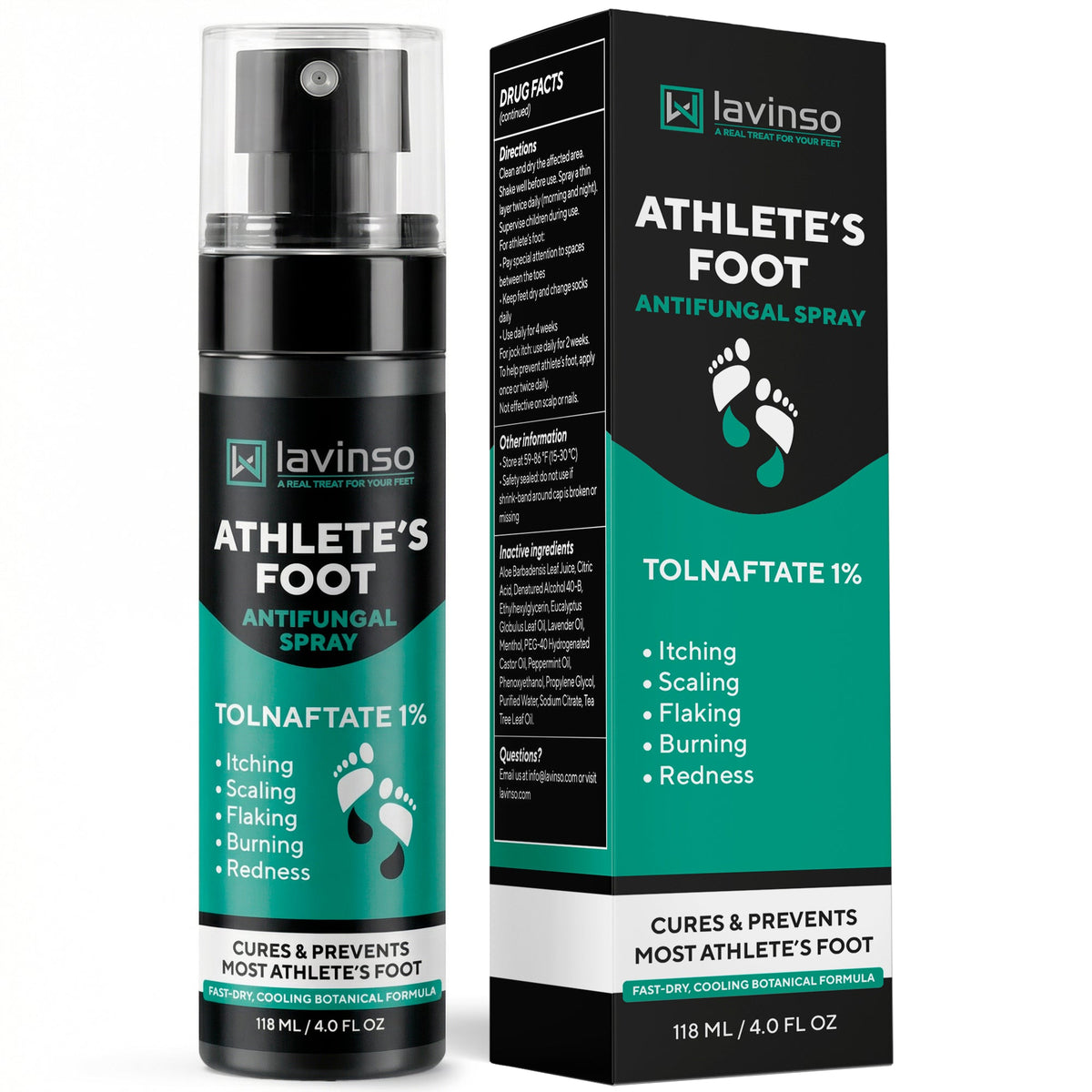
Most cases respond well to an over-the-counter (OTC) antifungal. Common OTC active ingredients include tolnaftate, clotrimazole, miconazole and terbinafine. Lavinso Athlete's Foot Antifungal Spray contains tolnaftate 1%, which cures most athlete's foot and relieves itching, burning, cracking and scaling.
How to use an antifungal spray
- Wash the affected area and dry it thoroughly, especially between the toes.
- Shake the bottle and spray a thin layer over the affected area twice a day, morning and night.
- Continue for 4 weeks, even if the itching stops sooner. Stopping too early is one of the main reasons athlete's foot comes back.
- Put on clean, dry socks and let your shoes air out.
A spray is handy because it reaches between the toes without rubbing infected skin, and it dries quickly so you can put socks on straight away.
How to stop athlete's foot from coming back
- Dry your feet completely after every shower, including between each toe.
- Change socks daily, or more often if your feet sweat. Choose breathable, moisture-wicking fabrics.
- Wear flip-flops in gym showers, locker rooms and around pools.
- Rotate your shoes so each pair can dry out for at least 24 hours.
- Keep shoes fresh. Our Tea Tree Foot Spray is a cosmetic deodorizing spray for feet and shoes — it doesn't treat infection, but it helps keep sweaty feet and footwear fresh.
- Don't share towels, socks or shoes.
- If you've had athlete's foot before, keep using your antifungal once or twice a day as directed to help prevent it from returning.
Is athlete's foot contagious?
Yes. It can spread to other people through shared floors, towels and shoes, and to other parts of your own body — for example to the groin if you use the same towel. Wash your hands after treating your feet and use a separate towel for them until the infection has cleared.
Can athlete's foot go away on its own?
Mild cases sometimes improve if you keep your feet very clean and dry, but the fungus often lingers in the skin and comes back. Treating it properly with an antifungal for the full four weeks is the most reliable way to clear it.
When to see a doctor
See a doctor if there is no improvement after 4 weeks of treatment, if the skin is broken, swollen, hot or very painful, if you notice pus or red streaks, or if you have diabetes or a weakened immune system. Athlete's foot can also spread to the toenails; OTC sprays like tolnaftate are not effective on nails, so nail fungus needs a doctor's advice.
Shop athlete's foot care
- Athlete's Foot Antifungal Spray with tolnaftate 1% — treats athlete's foot
- Tea Tree Foot Spray — keeps feet and shoes fresh
- Tea Tree Foot Soak — refreshing Epsom salt soak for sweaty feet
See all products for athlete's foot. Every order is covered by our 30-day money-back guarantee.
This article is for general information and isn't medical advice. Always read and follow the label.