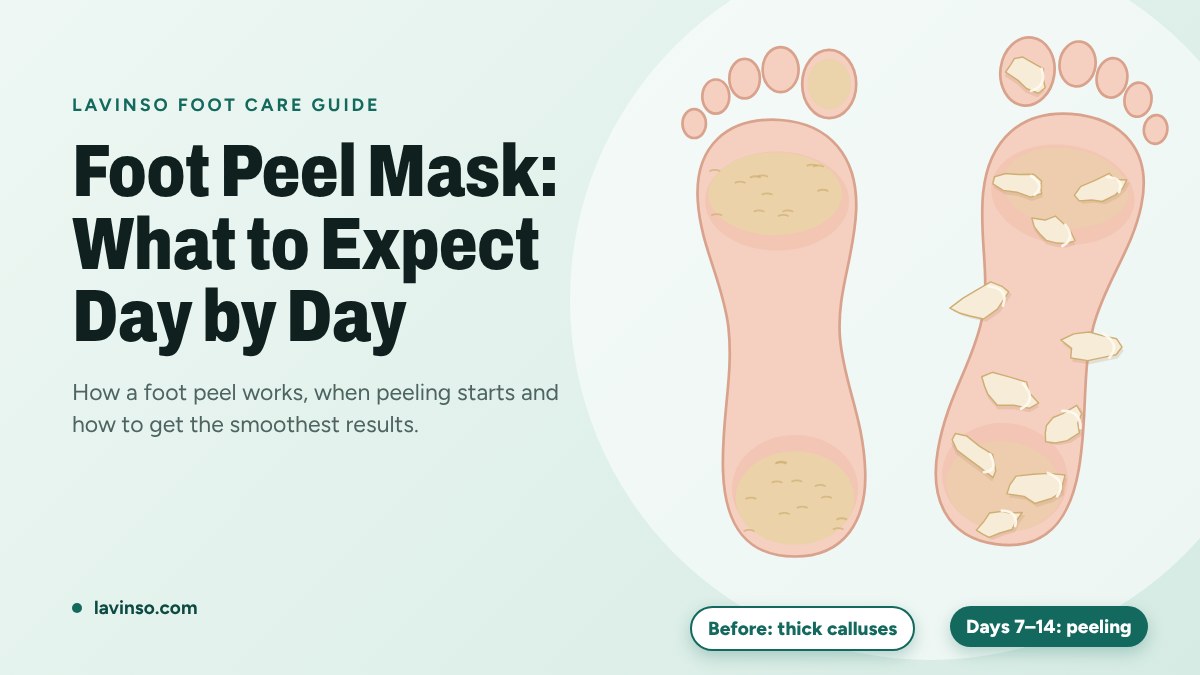
Foot Peel Mask: What to Expect Day by Day (and How to Get the Best Results)
A foot peel mask is one of the easiest ways to get rid of calluses and dead skin at home. But the first time you use one, the process can be surprising: nothing seems to happen for days, and then your feet start shedding skin in sheets. Here is exactly what to expect, day by day, and how to get the smoothest results.
How a foot peel mask works
A foot peel is a pair of plastic booties filled with a gel or liquid that contains fruit acids — alpha hydroxy acids (AHA) such as lactic and glycolic acid, and beta hydroxy acid (BHA) such as salicylic acid. While you wear the booties, the acids soak into the thick outer layer of skin on your soles and loosen the bonds that hold dead skin cells together. A few days later, that layer starts to come away on its own, revealing the softer skin underneath. Unlike a pumice stone or file, the peel works evenly across the whole sole, without scraping.
How to use a foot peel mask
- Start with clean, dry feet. Remove nail polish and make sure there are no cuts, blisters or irritated skin.
- Put on the booties and seal them around your ankles. Wearing a pair of socks over them keeps them snug and lets you move around.
- Wait 60 minutes. Relax, read or watch something — just avoid walking on slippery floors.
- Take them off and rinse your feet thoroughly with warm water and mild soap, then dry them.
The Lavinso Aloe Vera Foot Peel Mask also contains aloe vera to keep skin comfortable during the treatment, and one size fits most feet, up to men's US size 13.
Foot peel timeline: what happens day by day

Days 1–3: nothing visible
Your feet may feel a little tight or dry, but there is usually no peeling yet. This is normal — the acids are still working in the deeper layers of dead skin.
Days 3–7: peeling begins
Skin typically starts to flake around the toes, the sides of the feet and the thinner areas first. Thick calluses on the heels and balls of the feet often follow a day or two later.
Days 7–14: the main peel
This is the dramatic part: larger pieces of skin come away, especially after a bath or shower. It looks strange, but it doesn't hurt. Wearing socks keeps things tidy.
After two weeks: smooth new skin
Once the peeling stops, the skin underneath should feel noticeably softer and smoother. Very thick calluses may not clear completely after one treatment — you can repeat the peel after 4–6 weeks.
Every foot is different, so your timeline may be a few days shorter or longer depending on how thick and dry your skin is.
Tips for the best results
- Soak your feet daily for 10–20 minutes from day two or three. Warm water speeds up peeling; an Epsom salt soak like our Tea Tree Foot Soak makes it more pleasant.
- Don't pull or cut the peeling skin. Let it shed naturally to avoid sore spots.
- Hold off on heavy moisturizer until the peeling is finished — it can slow the process down.
- Moisturize afterwards. Once your feet have stopped peeling, apply Urea 40% Foot Cream regularly to keep calluses from building back up.
- Plan ahead. If you have a beach trip or sandal event coming up, start the peel about two weeks before.
Why aren't my feet peeling?
If nothing has happened after a week, don't worry — thick skin simply takes longer. Daily warm soaks usually get things moving. Peeling can also be lighter if your skin wasn't very thick to begin with, if you used heavy moisturizer right after the treatment, or if the booties didn't stay in close contact with your soles. You can repeat the treatment, but wait at least four weeks between peels.
How often can you use a foot peel?
Most people use a foot peel once every four to six weeks, after the previous peel has completely finished. In between, daily moisturizing with a urea cream keeps the results going for longer.
Who should not use a foot peel?
Don't use a foot peel on broken, cracked-open, irritated, sunburned or infected skin, or if you are sensitive to any of the ingredients. If you have diabetes, poor circulation or reduced sensation in your feet, ask your doctor before using any exfoliating foot treatment. If you notice burning, redness or swelling, rinse your feet and stop using the product.
Ready to try it?
The Lavinso Aloe Vera Foot Peel Mask comes in packs of two treatments — one for now and one for later — and every order is covered by our 30-day money-back guarantee. For a complete routine, see our guide to removing calluses and dead skin.
This article is for general information and isn't medical advice.