How to Get Rid of Cracked Heels Fast: A Step-by-Step Home Routine
Cracked heels are one of the most common foot problems. The skin on your heels gets dry, thick and stiff, and when it can't stretch any more it splits. Shallow cracks just look rough; deeper ones catch on socks and can hurt with every step. The good news: for most people, a consistent at-home routine is enough to make heels smooth again within a couple of weeks.
What causes cracked heels?
Your heel pad spreads out every time you step. If the skin there is dry and thick, it loses its flexibility and fissures open along the edge of the heel. The most common triggers are:
- Dry skin — cold weather, indoor heating, long hot showers and harsh soaps strip moisture.
- Pressure — standing for long hours, walking on hard floors and extra body weight.
- Open-back shoes and sandals — they let the heel pad expand sideways with every step.
- Thick, callused skin — hardened skin cracks much more easily than soft skin.
That's why fixing cracked heels always has two parts: get rid of the hard, dead skin, and then keep the skin underneath hydrated.
A step-by-step routine for cracked heels
Step 1: Soften the skin
Soak your feet in warm (not hot) water for 10–15 minutes. Adding Epsom salt, like our Tea Tree Foot Soak, makes the soak more relaxing and helps soften rough skin. Pat your feet dry afterwards, especially between the toes.
Step 2: Remove the hard rim of dead skin
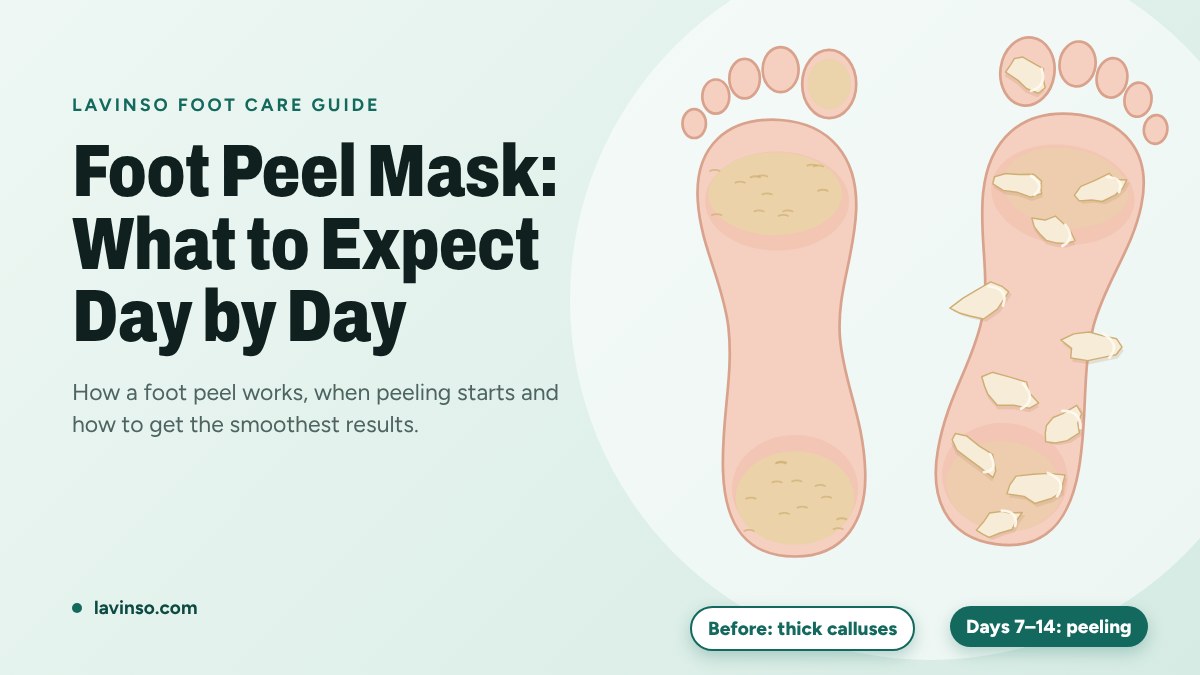
If the edges of your heels are thick, yellowish and hard, moisturizer alone can't get through. The gentlest way to remove that layer is an exfoliating foot peel such as the Lavinso Aloe Vera Foot Peel Mask: you wear the booties for 60 minutes, and over the next one to two weeks the dead skin sheds on its own. There is no scraping and no risk of cutting healthy skin. You only need to do this once every 4–6 weeks.
Step 3: Moisturize every night with urea
This is the step that makes the biggest difference. After your shower or soak, massage a thin layer of a high-strength urea cream into your heels. Our Urea 40% Foot Cream combines 40% urea, which softens hard, dry skin and draws water into it, with 2% salicylic acid to gently exfoliate the surface, plus hyaluronic acid and ceramide 1 to lock moisture in.
Step 4: Put on cotton socks
Socks keep the cream on your heels instead of your sheets and help it absorb overnight. Breathable cotton works best.
Step 5: Keep going
Use the cream every night until your heels are smooth, then two or three times a week to keep them that way. Cracked heels come back quickly if you stop moisturizing completely.
Why urea works better than ordinary lotion
Most body lotions are designed for normal skin and mostly sit on the surface. Urea is different: it is part of the skin's own natural moisturizing factor. At high concentrations it loosens the thick, hardened layer of skin and binds water inside it, so heels become flexible again instead of splitting. That makes urea creams one of the most popular choices for rough, cracked feet.
How long does it take to fix cracked heels?
Most people feel softer heels within a few days of nightly moisturizing. Shallow cracks usually close within one to two weeks of a consistent routine. Deep, long-standing fissures take longer, and results always depend on how thick and dry your skin is to begin with.
Mistakes that make cracked heels worse
- Cutting or shaving the skin. Callus razors and scissors can easily cut too deep and open the door to infection.
- Over-filing. Aggressive filing every day leaves skin raw, and the body responds by building even thicker skin.
- Very hot water and harsh soap. Both strip natural oils and dry heels out further.
- Stopping as soon as it looks better. Without regular moisturizing, the skin thickens and cracks again.
How to prevent cracked heels
- Moisturize your heels right after showering, while the skin is still slightly damp.
- Choose supportive, closed-back shoes for long days on your feet.
- Do a foot peel every month or two to stop calluses from building up.
- Wear cotton socks at night after applying cream.
When to see a doctor
See a doctor or podiatrist if your cracks are very deep, bleed, are painful when you walk, or show signs of infection such as redness, warmth, swelling or discharge. If you have diabetes or poor circulation, always check with your doctor before treating cracked heels at home.
Shop the routine
- Urea 40% Foot Cream — nightly moisturizer for cracked heels
- Aloe Vera Foot Peel Mask — removes thick, dead skin
- Tea Tree Foot Soak — softens heels before treatment
See all products for cracked heels. Every order is covered by our 30-day money-back guarantee.
This article is for general information and isn't medical advice.